
On the woman the cameras built, hunted, and then mourned — in that order.
Before there were paparazzi apps that crowdsourced a celebrity’s location in real time, before comment sections turned strangers’ breakdowns into group entertainment, before “the most photographed woman in the world” was a title anyone could hold for more than a news cycle, there was Diana Spencer. She did not invent modern celebrity culture. But she is its clearest origin story — the moment fame stopped being about talent or office and became, instead, about pure, sustained visibility. She was watched more continuously, more invasively, and more profitably than any private citizen in history had been watched before her, and the machine that did the watching is still running, largely unchanged, thirty years later.
This is not a piece about a fairy tale. Diana’s story has been told that way so many times — the shy nursery-school teacher, the ill-fated marriage, the tragic ending — that the fairy-tale frame has become its own kind of erasure, flattening a complicated adult woman into a folk myth. We are interested in the machine, not the myth. Specifically: how a single woman’s public life became the blueprint for an entire industry, and what her death proved about the cost of running it.
The Making of “The Most Photographed Woman in the World”
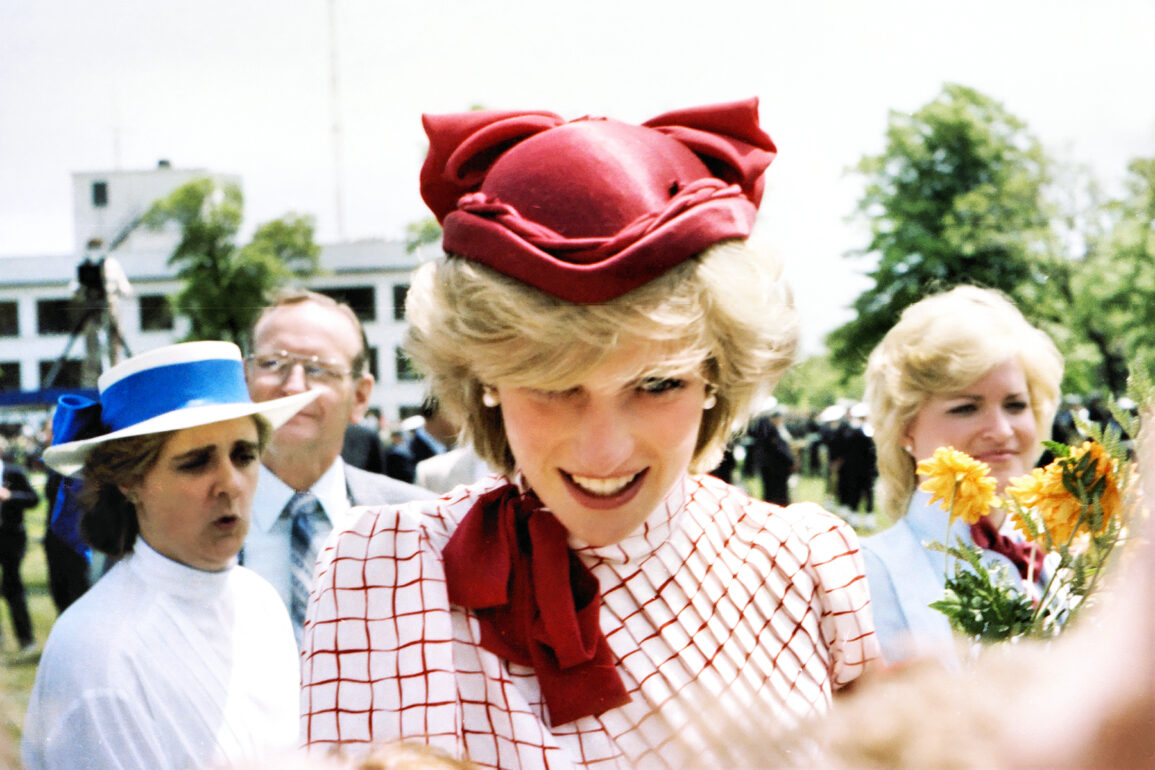
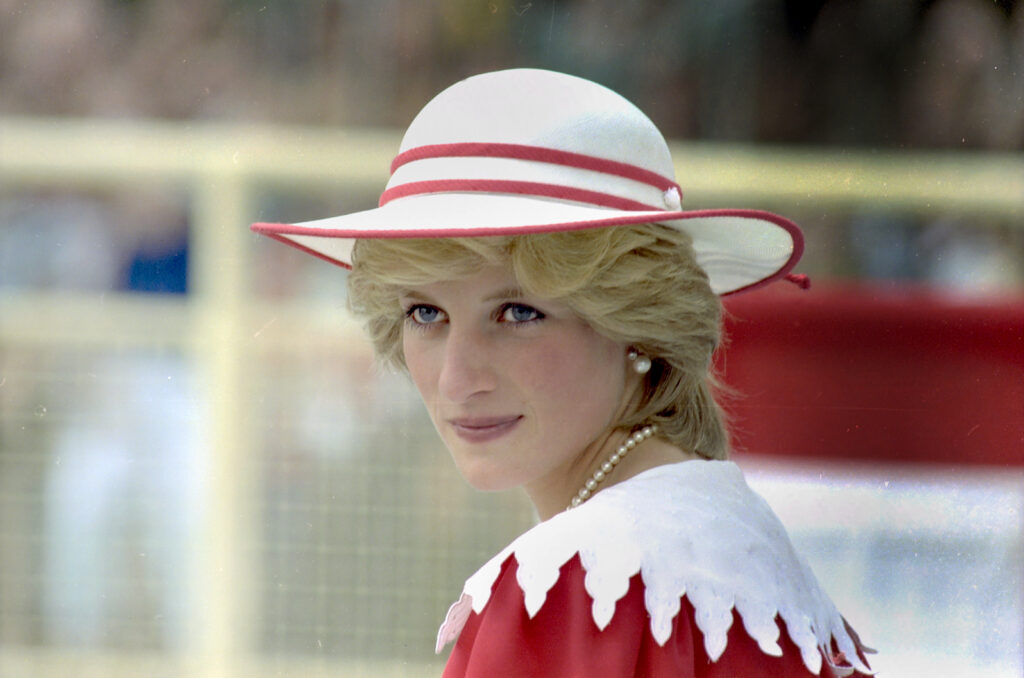
Diana Spencer was nineteen when her engagement to Prince Charles was announced in February 1981, and within days she had become the most sought-after image in British media. What followed was not gradual. It was immediate and total. Photographers camped outside her flat before the wedding. Editors discovered that a single grainy image of her could sell out a print run. The wedding itself — watched by an estimated 750 million people worldwide — established, in a single afternoon, that there was no ceiling on public appetite for this woman’s image.
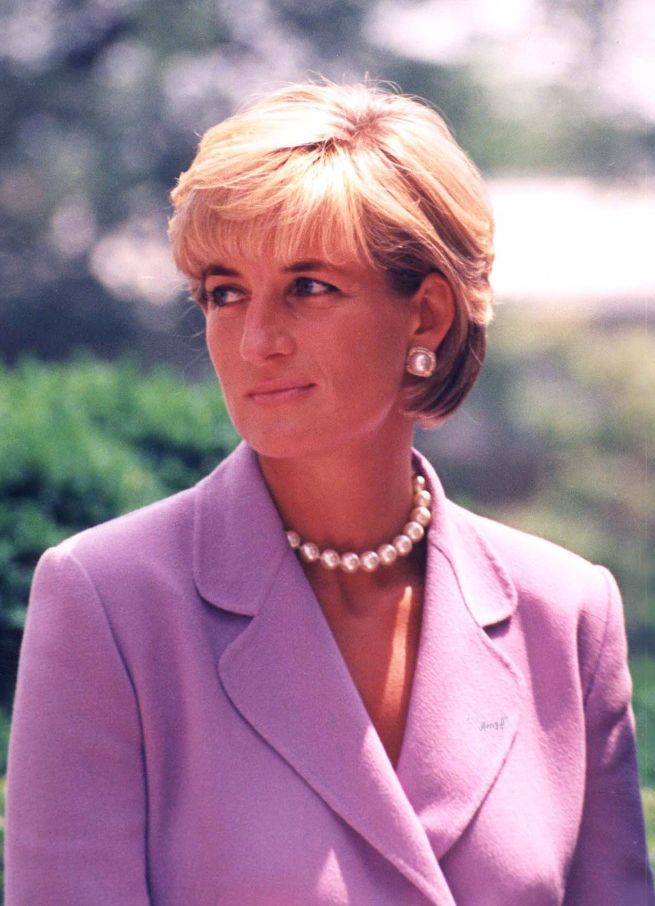
What’s easy to lose in retrospect is how young and unprepared she was for what this meant. Diana had no public career, no publicist trained for this scale, no precedent to study. The institution she’d married into offered protocol, not protection. She was, from nineteen, effectively a test case for a level of surveillance the media had never before been able to sustain on a single private individual — because no single private individual had ever generated this much commercial value simply by existing in public.
The economics matter here, and they are worth stating plainly: a photograph of Diana could fund a photographer’s entire year. Tabloids built dedicated desks around her movements. This wasn’t interest in a public figure’s public role. It was an entirely new commercial category — ordinary life, monetized, because the person living it happened to be beautiful, young, and married into an institution the public already couldn’t stop watching.
Learning to Use the Machine That Was Hunting Her
What makes Diana genuinely significant in celebrity mythology — rather than simply its most famous casualty — is that she was, for a period, extraordinarily skilled at turning the same machine that hunted her into a tool she could aim herself.
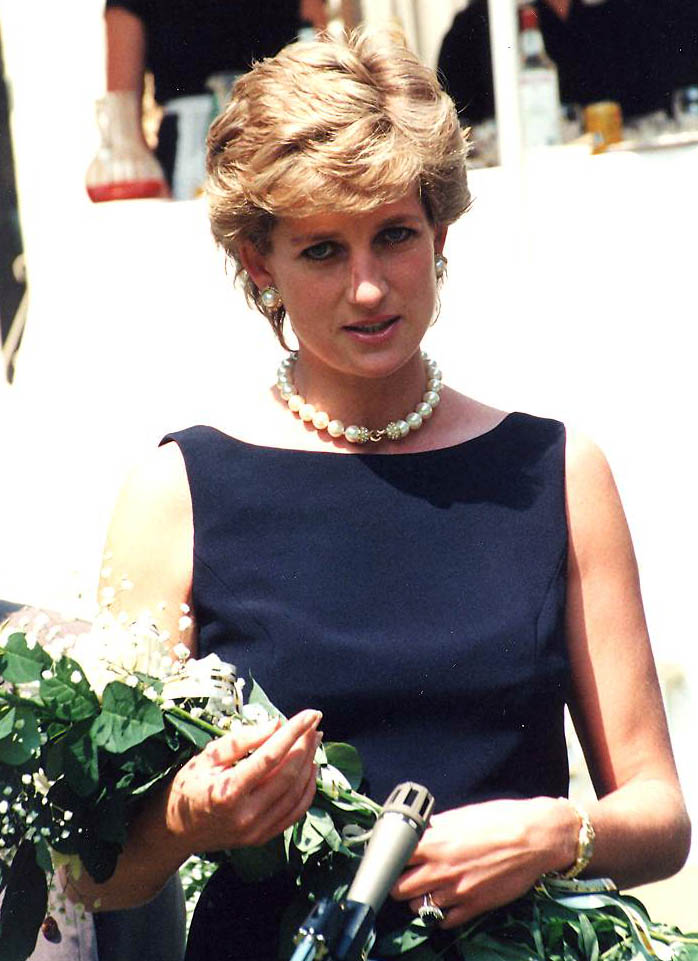
The clearest example is the November 1995 BBC Panorama interview with Martin Bashir, watched by over 20 million people in the UK alone. Sitting alone, in muted eyeliner and a dark suit, Diana spoke about her marriage, her bulimia, her mental health, and her husband’s infidelity with a directness no royal had ever used on camera. The interview’s ethics have since been seriously and legitimately questioned — a 2021 independent inquiry found Bashir had used deceitful methods to secure it, and the BBC formally apologized. But the interview’s effect at the time was singular: a woman who had spent fourteen years as the subject of speculation became, for ninety minutes, the author of her own narrative. She did not deny the tabloid appetite for her life. She fed it, deliberately, on her own terms, and in doing so demonstrated something that would become a core strategy for every major celebrity who came after her: if the cameras cannot be turned off, they can sometimes be turned.
She used the same instinct with quieter, more consequential results elsewhere. Her 1987 visit to a London AIDS ward — where she was photographed shaking hands, bare-handed, with a patient at a moment when public misinformation about transmission was widespread and visceral — did more to shift public understanding of HIV/AIDS in Britain than a decade of public health messaging had managed. Her 1997 walk through an active minefield in Angola, undertaken to support a landmine-clearance campaign, generated global headlines that helped push the Ottawa Treaty banning anti-personnel mines toward ratification months later. In both cases, Diana didn’t escape the camera’s appetite. She redirected it — proving that the same mechanism built to consume her could, occasionally, be pointed at something that mattered more than her.
The Machine That Never Actually Turned Off
But strategic use of an unrelenting apparatus is not the same as controlling it, and the years following her 1996 divorce from Prince Charles made the distinction brutally clear. Freed from royal protocol but not from royal-scale fame, Diana entered a period of even more intense pursuit — photographers now operating without the institutional buffer the monarchy had, however imperfectly, provided.
By 1997, the pursuit had become genuinely dangerous, and this was not a secret at the time. Diana herself spoke publicly, on multiple occasions, about being followed, boxed in by motorcycles, photographed through car windows at speed. On the night of August 31, 1997, the Mercedes carrying Diana and Dodi Fayed left the Ritz in Paris pursued by photographers on motorcycles. The car crashed in the Pont de l’Alma tunnel. Diana died hours later, at thirty-six. The French investigation that followed examined the role of the pursuing photographers extensively; several were initially detained, though ultimately no one was convicted in connection with the crash itself, which official inquiries attributed primarily to the driver’s excessive speed and blood alcohol level. What is not in dispute, and was not in dispute even in the immediate aftermath, is that the vehicle was being actively chased at the moment it crashed — pursued by the same economy of image-capture that had funded photographers’ careers for sixteen years.
The Grief That Followed, and What It Revealed
The public reaction to Diana’s death remains one of the most studied instances of mass mourning in modern history, and it is worth sitting with rather than summarizing quickly, because it says as much about the culture that produced it as her life did.
Within days, an estimated one million bouquets had been laid outside Kensington Palace, forming a field of cellophane and cut flowers several feet deep. Books of condolence stretched for city blocks with hours-long queues. Her funeral, on September 6, 1997, was watched by an estimated 2.5 billion people worldwide — roughly a third of the planet’s population at the time, tuning in simultaneously to mourn a woman most of them had never met and knew only through the exact image-making apparatus that had just killed her.
Grief researchers and cultural critics have offered competing readings of this moment ever since. Some have read it as a genuine, if displaced, outpouring — grief for a woman whose public vulnerability had made her feel, to millions of strangers, like someone they personally knew. Others have read it more critically, as a culture briefly confronting, and then immediately absolving itself of, its own complicity — a nation that had bought the tabloids, watched the coverage, and fed the demand for sixteen years, weeping over the exact outcome that demand had helped produce, then returning to the newsstand within weeks. Both readings are probably true simultaneously. Mass grief and mass complicity are not mutually exclusive; they may, in fact, require each other.
The Blueprint That Outlived Her
What makes Diana’s story a genuine hinge point in celebrity mythology — rather than simply its saddest chapter — is how directly her death should have functioned as evidence, and how little that evidence actually changed the underlying business model.
The paparazzi economy that pursued her did not shrink after 1997. It scaled. Digital photography, then camera phones, then social media multiplied the number of people capable of capturing and monetizing a celebrity’s unguarded moment by orders of magnitude Diana’s era never had to contend with. The same commercial logic that made a single photograph of her worth a photographer’s annual salary now runs at internet speed, distributed across millions of accounts rather than a handful of tabloid desks, with even less institutional friction to slow it down.
The stories of Britney Spears’s conservatorship-era surveillance, Amy Winehouse’s publicly documented decline, Lindsay Lohan’s six-figure paparazzi photographs, Anna Nicole Smith’s reality-television collapse operates on infrastructure Diana’s life and death should have forced a reckoning with. It didn’t. The infrastructure simply learned to route around the one moment its cost was made undeniable.
Diana is not the most tragic figure in celebrity mythology, and treating her as simply the saddest story flattens what actually makes her significant. She is the clearest demonstration of the full arc this category keeps tracing: a woman turned into pure image before she had any say in it, learning partway through to wield that image deliberately and, sometimes, for genuine good — and still, ultimately, consumed by the exact mechanism she’d learned to use. Her death did not end the machine. It simply proved, at unmistakable scale, what the machine had always been capable of costing. The industry ran the cost-benefit analysis anyway, and decided to keep running.