
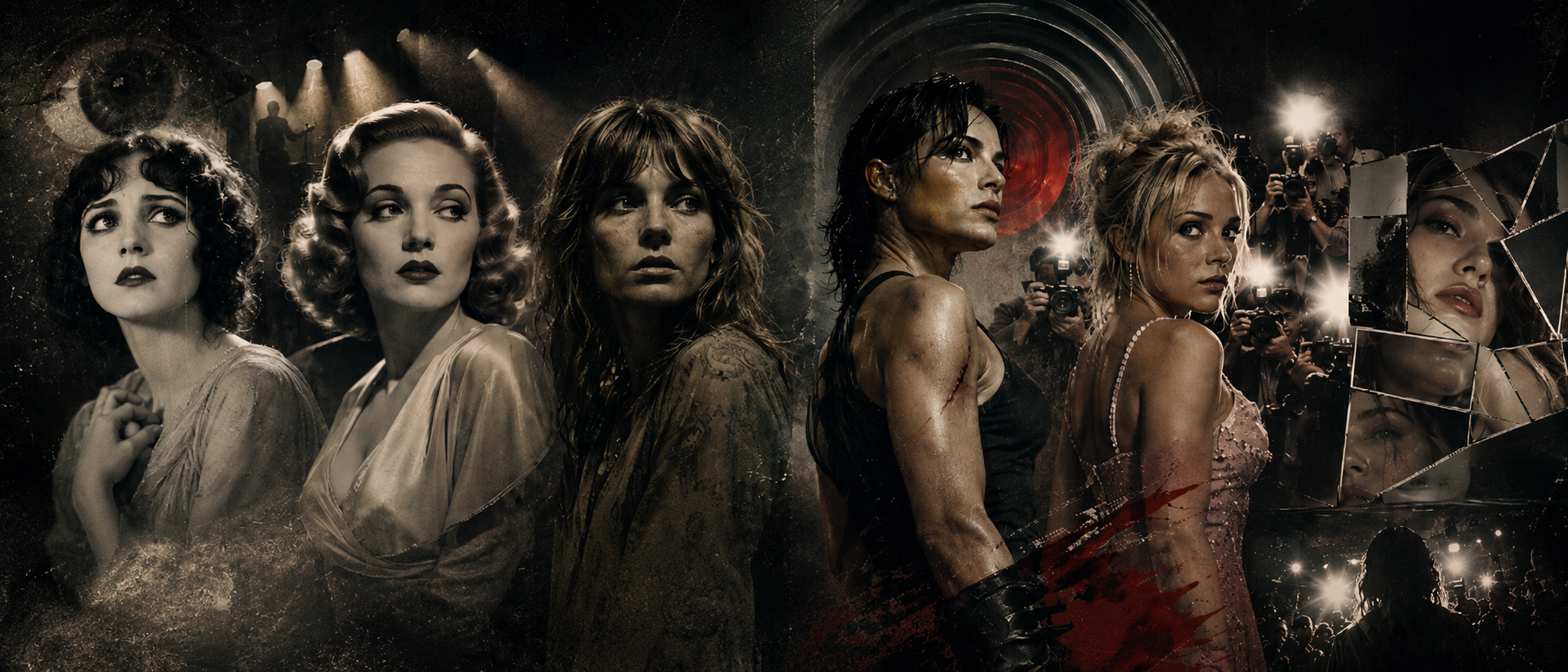
On celebrity, performance, and a hundred years of women being watched.
Women have always been the thing the camera wants most. Not the story — the face. For over a century, film has used women as its central spectacle and its most reliable alibi, dressing up looking as meaning, and meaning as looking. This is a history of that arrangement. Not a highlight reel of “strong female characters,” but an account of how the industry’s idea of womanhood has shifted — sometimes forward, often sideways, occasionally backward wearing the costume of progress.
We are not interested in a tidy timeline of triumphs. We are interested in the wound underneath it: the gap between what women were allowed to represent on screen and what they were actually living off it.
The Silent Era: Suffering as Spectacle
Before sound, the female face had to do everything. Cinema’s first stars — Lillian Gish, Mary Pickford, Theda Bara — built entire careers on expressions that could survive the absence of a voice. The silent era split women into two economies almost immediately: the virtuous ingénue, whose suffering was the plot, and the vamp, whose sexuality was the threat that justified punishing her.
This was the birth of an equation the industry would spend a century refining — a woman’s narrative value measured by how much she could be looked at while enduring something. Pickford played “America’s Sweetheart” for over a decade, infantilized well into her thirties, because the audience paid to watch innocence, not autonomy. Bara, by contrast, was cast as pure appetite — dangerous, foreign-coded, disposable once the fantasy expired.
Neither woman got to be a person. They got to be a genre.
The Golden Age: The Studio System’s Manufactured Womanhood
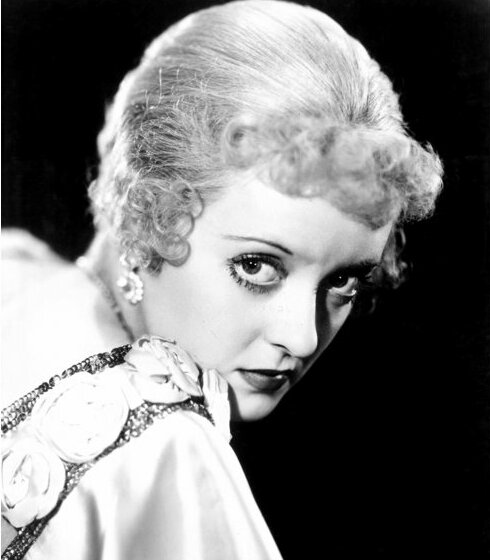
By the 1930s and ’40s, the studio system had turned actresses into inventory. Contracts controlled diet, marriage, pregnancy, even names. Bette Davis and Joan Crawford fought publicly and privately for roles with interior lives — women who were ambitious, difficult, unlikeable — and were punished for it in the press even as audiences filled theaters to watch exactly that.
This era gave us the archetypes that still structure casting today: the femme fatale of film noir, whose intelligence is coded as danger; the devoted wife, whose entire function is stability; the “difficult woman,” always framed as an aberration rather than a data point. Noir is worth dwelling on, because it is the genre most honest about the deal: femme fatales were narratively punished for their cunning, but they were also the only women on screen permitted to want something and act on it. The genre feared them because it half-admired them.
New Hollywood and the ’70s: Complexity Arrives, Briefly
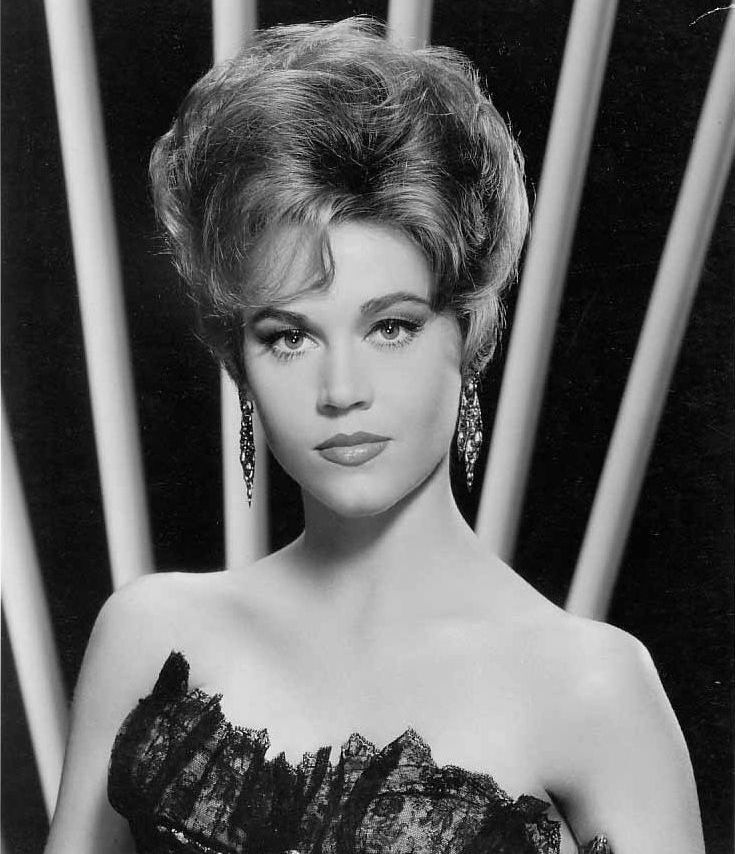
The collapse of the studio system in the late 1960s cracked something open. New Hollywood directors — mostly men, worth noting — began writing women who were messy, sexual, self-destructive, and narratively central rather than decorative. Faye Dunaway in Bonnie and Clyde, Jane Fonda in Klute, Gena Rowlands in A Woman Under the Influence: these were performances that treated female instability not as a moral lesson but as a legitimate subject.
It didn’t last, and it didn’t spread evenly. The same decade that gave us Rowlands gave us the slasher film, which would calcify into one of cinema’s most durable female archetypes: the Final Girl. Carol Clover’s theory of the Final Girl — chaste, resourceful, the last one standing — remains one of the most cited frameworks in film scholarship because it named something the industry had been doing instinctively for years: survival on screen is conditional, and the condition is almost always sexual restraint.
The ’80s and ’90s: Muscle, Irony, and the Rise of the Action Heroine
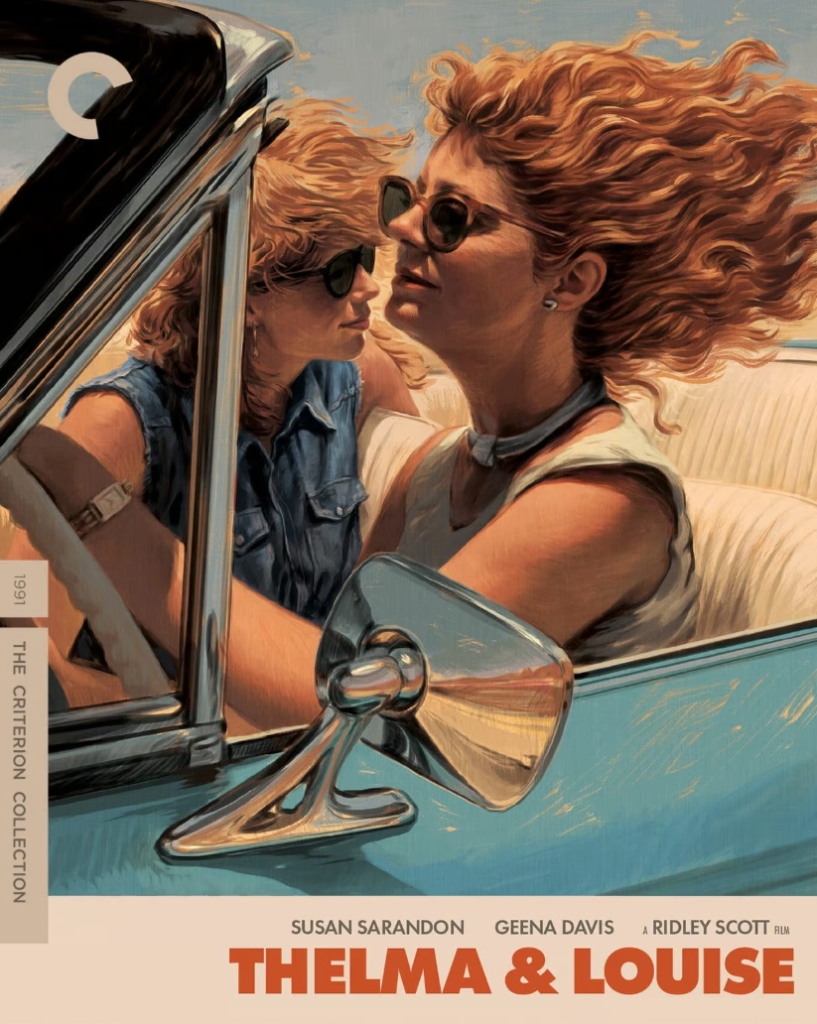
Sarah Connor. Ellen Ripley. Thelma and Louise. The ’80s and ’90s produced a new physical vocabulary for women on screen — muscle, weaponry, forward motion instead of reaction. This is often framed as unambiguous progress, and it was progress, but it came with its own quiet tax: female strength had to be legible as spectacle to be greenlit. Linda Hamilton’s Sarah Connor is magnetic precisely because her body becomes a battleground the camera is allowed to admire and fear.
Thelma & Louise (1991) remains the era’s most instructive text — a film about two women who become outlaws not because they seek power but because the alternative, staying, was worse. Its ending, still debated over three decades later, refused the audience a safe resolution. That refusal is why it endures.
The ’90s also gave the industry its “post-feminist” alibi: the idea that equality had already been won, so female characters could return to romantic-comedy passivity without political cost. Feminism became a punchline before it had finished its work.
The 2000s: The Manic Pixie Problem and the Cost of Likability
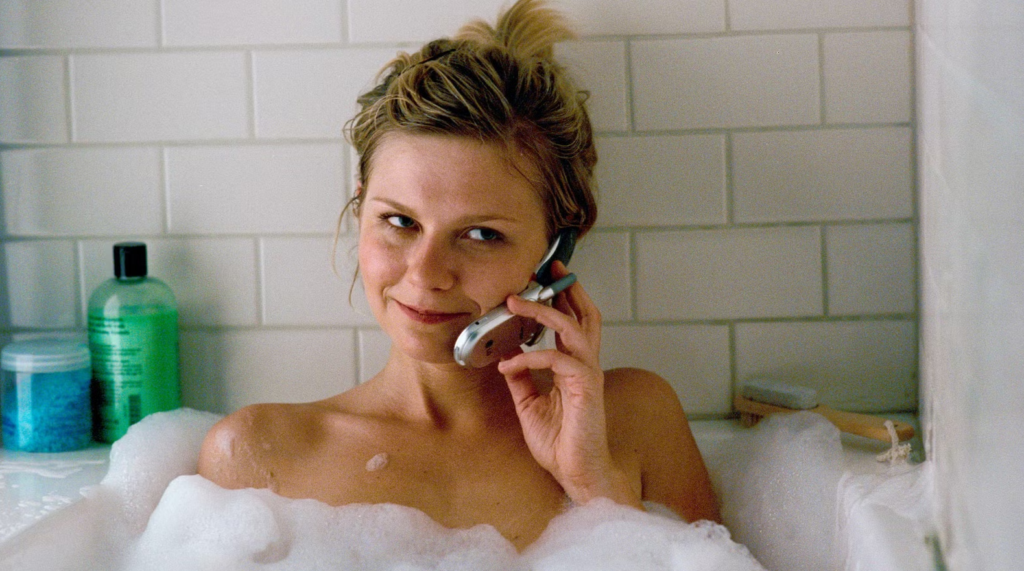
The early 2000s produced a specific and durable archetype: the woman who exists to fix a man’s inner life, quirky and luminous and utterly without an arc of her own. Kirsten Dunst’s character in Elizabethtown (2005) is the case that pushed critic Nathan Rabin to name the pattern outright, but the template had already been running for years — Natalie Portman in Garden State (2004), a string of Zooey Deschanel roles later in the decade, each one a woman whose entire narrative function was to jolt a sad, passive man back into feeling alive.
Rabin’s term for this, the “Manic Pixie Dream Girl,” described a character who exists purely to teach a brooding male lead to embrace life, invented by writers who had never bothered giving her a life of her own to embrace.
The Manic Pixie Dream Girl exists solely in the fevered imaginations of sensitive writer-directors to teach broodingly soulful young men to embrace life and its infinite mysteries and adventures.”
— Nathan Rabin
The label spread fast enough that it eventually swallowed its own critique — used so loosely, on so many unrelated female characters, that Rabin himself later disowned it. But the underlying pattern it named was real, and it was everywhere: female characters written not as people with independent wants but as instruments calibrated to fix, soften, or awaken someone else’s story. Likability did heavy lifting in this era. A woman on screen could be quirky, wounded, even a little unstable, as long as all of it was legible as charming and none of it made her difficult to be around. The moment a female character’s damage stopped being decorative and started being inconvenient, the culture reached for a different, older archetype instead.
This decade also intensified something older — the industry’s obsession with women who suffer beautifully in public, this time with a delivery system faster and more relentless than film or print journalism had ever managed alone. Tabloid culture and reality television converged with cinema’s existing appetite for female breakdown as content, and for the first time the three fed each other in something close to real time.
Britney Spears’s very public 2007 crisis, Anna Nicole Smith’s decline tracked across her own reality series The Anna Nicole Show, Paris Hilton’s arrests and jail time turned into recurring segments rather than isolated news items — none of this was cinema exactly, but it was consumed with cinema’s grammar: close-ups, narrative arcs, a beginning, a breakdown, a redemption we were already impatient for before the crisis had finished happening.

We watched women lose custody battles, mental health, and dignity on camera and called it entertainment, then called it tragedy, then moved on to the next headline. It is not a coincidence that this is also the decade celebrity journalism became a genre unto itself, with dedicated 24-hour cycles built specifically to keep pace with a woman falling apart in installments.
The 2010s: Time’s Up, the Antiheroine, and the Limits of Representation
The Time’s Up and #MeToo reckonings, beginning in 2017, forced a public accounting of who got to work, who got believed, and who had been protected for decades. The industry response was visible and fast: more female directors greenlit, more films passing basic representation benchmarks like the Bechdel test, more roles explicitly marketed as “feminist.”
But representation and reckoning are not the same thing, and the decade’s most interesting female characters were not the triumphant ones — they were the antiheroines. Amy Dunne in Gone Girl, Cassie in Promising Young Woman, the women of Killing Eve: characters permitted, finally, to be cruel, calculating, and narratively rewarded for it rather than punished. This is arguably the most significant shift in a century of female representation — not that women became “strong,” a word that has curdled into marketing copy, but that they became allowed to be bad without the film moralizing about it.

Now: Fragmentation, Backlash, and the Unfinished Argument
There is no single story of where female representation in film stands today, because the industry itself is fragmented — prestige auteur films sit beside franchise tentpoles sit beside a returning wave of nostalgia-driven “post-feminist” content that echoes the 1990s almost exactly.
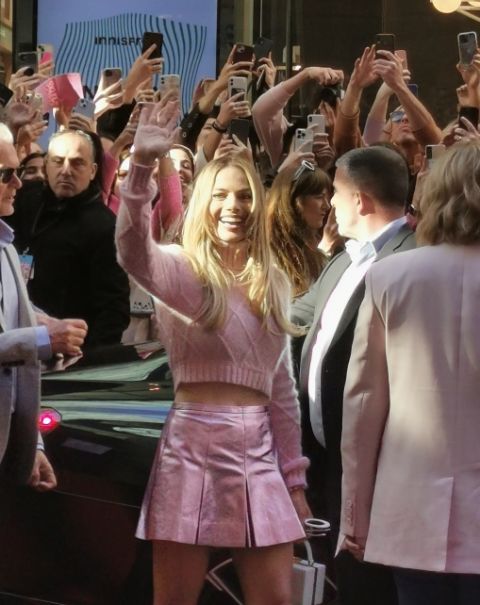
Barbie (2023) made the industry’s contradictions the actual subject of a summer blockbuster, which is either the most self-aware moment in this history or the most cynical — likely both.
What has genuinely changed is who is permitted behind the camera, which changes what gets asked of the women in front of it. But visibility is not the same as freedom from spectacle.
Women in film are still, overwhelmingly, watched first and heard second. The camera’s oldest habit — measuring a woman’s value by how well she performs her own undoing — has not disappeared. It has just learned better disguises.
Why This History Still Matters
Every archetype in this essay — the silent ingénue, the femme fatale, the Final Girl, the Manic Pixie Dream Girl, the antiheroine — is still in active circulation. They are not relics. They are the raw material every casting director, every screenwriter, every awards campaign is still drawing from, often without knowing it. Understanding where these patterns came from is the only way to see them clearly when they resurface, rebranded, in the next prestige drama or franchise reboot.
The Skarn will keep returning to this territory — not to celebrate progress, but to keep the record honest. Beauty is a wound that refuses to heal. So, it turns out, is the industry that keeps filming it.